
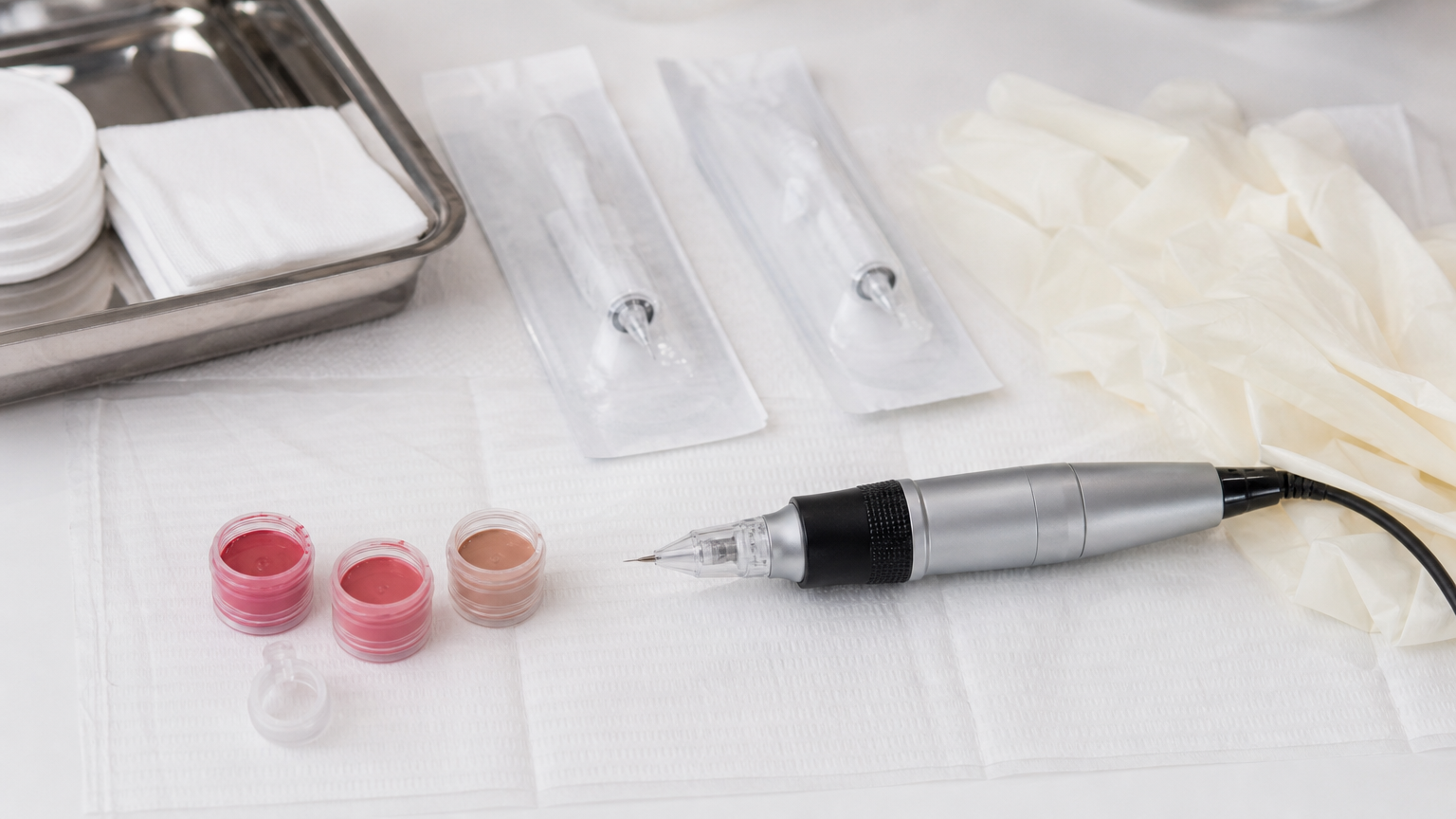
Lip micropigmentation is a semi-permanent cosmetic procedure that evens out lip colour and corrects small visual asymmetries in the outline. It is a technique that combines knowledge of colour theory, skin anatomy and rigorous biosafety. It therefore requires specific training, not just trial and error. That preparation is what a lip micropigmentation course provides.
Micropigmentation is not lip filler
This is the most common confusion among clients, and understanding the difference is the first step for anyone who wants to work in the field:
- Lip micropigmentation: deposits pigment in the skin to work on colour, outline and evenness. The impression of more defined lips comes from correcting the shape, not from volume.
- Lip filler: an injectable procedure, using substances such as hyaluronic acid, to change volume and structure.
The two procedures have different aims, materials and professional requirements. The course covers micropigmentation only; injectable procedures are not part of it.
Lip blush, watercolour effect, neutralisation: what they mean
Anyone researching the subject comes across several technique names. Broadly:
- Lip blush: a soft effect, like naturally flushed lips, without a hard outline.
- Watercolour effect: a translucent finish that looks like moisturised lips, not heavy make-up.
- Neutralisation: work on lips with a darker or purplish tone, where colour theory is used to even out the colour of the mucosa.
All of them rest on the same technical base (colour theory, skin anatomy and biosafety), which is precisely the core of the course.
A technique that demands more than manual skill
Unlike ordinary make-up, micropigmentation implants pigment in the skin. That is why biosafety, infection control and knowledge of lip anatomy are not optional details: they are the basis of safe work. Anvisa, Brazil's health regulatory agency, classifies tattoo studios — a closely related activity, since it also implants pigment in the skin — as health-related services, subject to licensing and inspection by local health surveillance, with good practice such as the use of protective equipment and proper sterilisation of materials. The same attention to biosafety underpins other courses at the school that involve needles, such as Peripheral IV Cannulation.
Assessing the client, and care before and after
Not everyone can have the procedure at any time. Situations such as an active cold sore, pregnancy or treatments that affect healing mean the procedure should be postponed or assessed with a doctor. Knowing how to carry out this prior assessment, advise the client and follow up the healing care is part of the practitioner's responsibility and is covered in the course.
Because the result is semi-permanent, the pigment fades over time, at a rate that varies with skin type, sun exposure and the client's aftercare.
What the course teaches
The training covers the whole procedure, including:
- Colour theory
- Skin anatomy and physiology
- Biosafety
- Pigment implantation techniques
- Correcting visual asymmetries
- Evening out lip colour
- Pre- and post-procedure care
- Correct use of equipment and materials
It is a 24-hour in-person course, with supervised practice, aimed both at people starting out in aesthetics and at professionals who already work in the field and want to expand their services.
Why specialise
Demand for semi-permanent cosmetic procedures has been growing, and clients increasingly look for practitioners who can show formal training, not just informal experience. A certificate from a recognised institution also helps convey confidence to the person undergoing the procedure.
The course at the Brazilian Red Cross — Rio de Janeiro Branch
The branch's Escola de Educação e Saúde CVB-RJ (School of Education and Health) runs the Lip Micropigmentation course:
- Hours: 24
- Minimum schooling: completed upper secondary (ensino médio)
- Format: in person
- Language: Portuguese — there is no interpreting or group in another language
- Who it is for: beginners and aesthetics professionals who want to expand their services
- Certificate: issued by the Brazilian Red Cross — Rio de Janeiro Branch on completion of every stage
Frequently asked questions
Are lip micropigmentation and lip filler the same thing? No. Micropigmentation works on colour and outline with pigment in the skin. Filler is an injectable procedure that changes the volume of the lips. The course covers micropigmentation only.
How long does lip micropigmentation last? It is a semi-permanent procedure: the pigment fades over time, at a rate that depends on skin type, sun exposure and the client's aftercare.
Can everyone have lip micropigmentation? Not at any time. Situations such as an active cold sore, pregnancy or treatments that affect healing mean the procedure should be postponed or assessed with a doctor. Prior assessment of the client is part of the course content.
Do I need to work in aesthetics already to take the course? No. The course welcomes both beginners and aesthetics professionals who want to add this service to their portfolio.
Is the course in person, or can I take it online? In person, with supervised practice, which is essential for a procedure that implants pigment in the skin.
Do I need a licence to see clients? In Brazil, the place where the procedure is carried out is subject to the rules of the municipality's health surveillance service, which is responsible for licensing and inspection. It is worth consulting the local authority before opening a practice.
What does the syllabus include? Colour theory, skin anatomy, biosafety, implantation technique, correcting asymmetries, and pre- and post-procedure care.
Sources and references
- Beauty services — Frequently asked questions — Anvisa — classification as a health-related service, licensing by local health surveillance and good biosafety practice, in Portuguese.
First published in Portuguese on 24 September 2026. Read the original →