Most emergencies do not happen in a hospital. They happen at home, in the kitchen, in the garden, on the stairs. Choking during lunch, a fall that leaves a deep cut, sudden fainting: these are ordinary situations in which the minutes before specialised help arrives make all the difference. Knowing what to do in those minutes is what a basic first-aid course teaches.
The first step is not to act: it is to look
Faced with an emergency, the impulse is to rush in to help. But the first thing to do is check whether the scene is safe: traffic, fire, electrical wires, risk of collapse. Anyone who puts themselves in danger can become a second casualty and stop helping the first. With the scene safe, the next step is to call for specialised help and, only then, start giving care within the limits of what you know.
192 or 193: who to call in Brazil
Both numbers are free and work 24 hours a day:
- SAMU (192): the ambulance service, for situations that threaten life or risk lasting harm, such as severe chest pain, intense shortness of breath, fainting, a seizure, suspected stroke (slurred speech, loss of strength on one side of the body) or accidents with casualties.
- Fire Brigade (193): for fires, rescues and people trapped in wreckage or rubble.
For drowning and electric shock, either number will respond. On both, the call handler tells you over the phone what to do until the team arrives. When in doubt, calling is always better than waiting.
Myths still going around
Some "home remedies" are still repeated and can make things worse:
- Burns: no toothpaste, butter, coffee grounds or any other substance. Brazil's Ministry of Health advises cooling the area under cold running water for about ten minutes and not bursting blisters. Extensive, chemical or electrical burns need urgent medical care.
- Seizures: do not put anything in the person's mouth or try to "pull the tongue". The most important thing is to protect the head, move away objects that could cause injury and call for help.
What to keep in a home first-aid kit
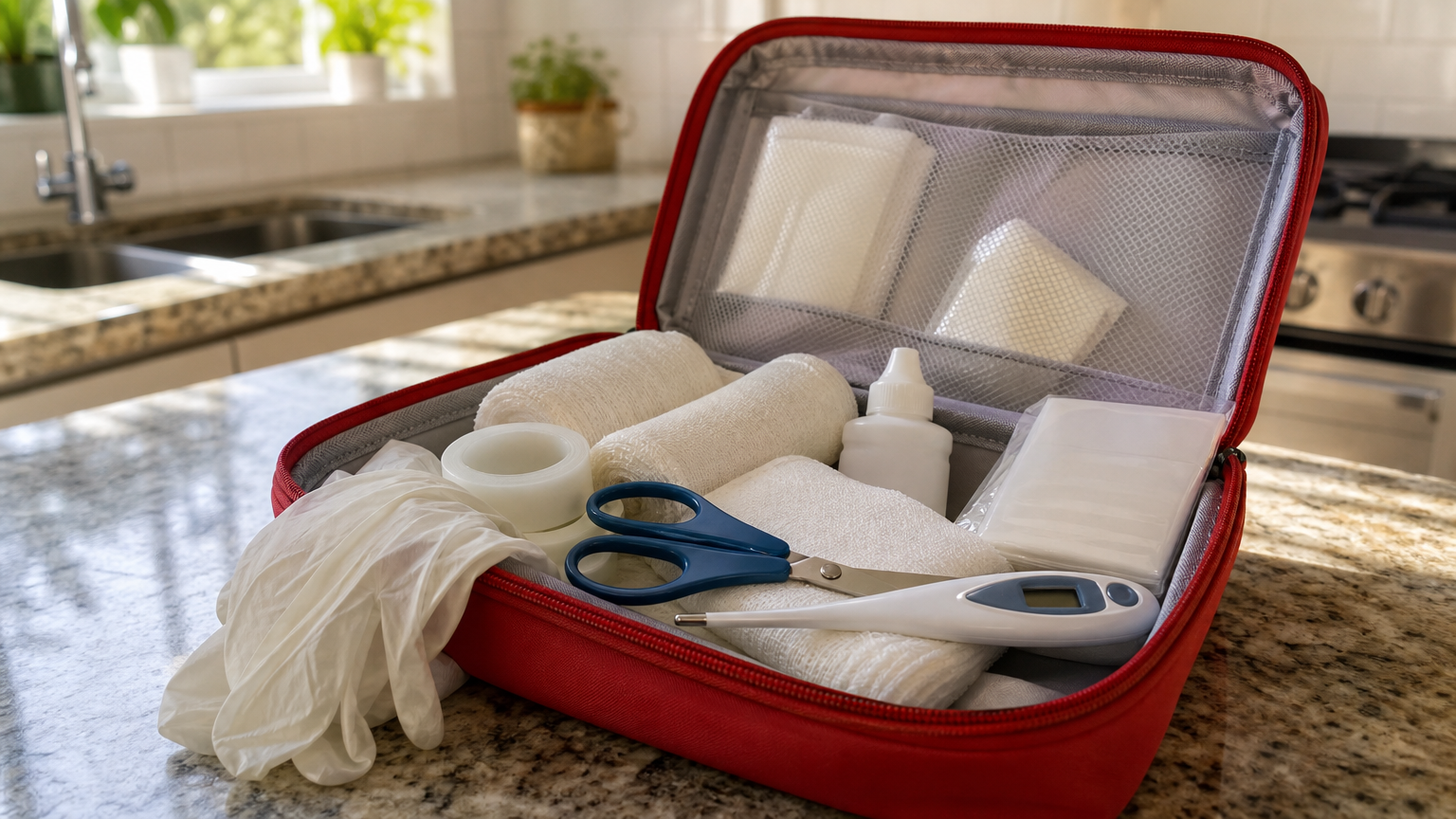
A home kit is for protecting wounds and giving first care until a medical assessment. The basic items include:
- Disposable gloves
- Sterile gauze and 0.9% saline solution for cleaning wounds
- Bandages, adhesive or micropore tape and plasters
- Round-tipped scissors and a thermometer
- A visible list with the emergency numbers (192 and 193 in Brazil) and family contacts
Medicines should only be used on medical advice.
What if I don't know what to do?
Many people hold back from helping for fear of getting it wrong. Brazil's Penal Code (art. 135) makes it an offence to fail to help when you can do so without personal risk, or, in such cases, to fail to call the public authorities for help. In other words, calling 192 or 193 is already a way of helping. The course exists so that, besides calling, you know what to do safely until help arrives.
What the course teaches
The programme is designed for anyone, with no prior training in health care required, and covers:
- Assessing the casualty
- Cardiopulmonary resuscitation (CPR)
- Using the automated external defibrillator (AED)
- Bleeding control
- Trauma care
- Procedures for choking and fainting
- Other everyday urgent situations
It is an 8-hour in-person course, with demonstrations and supervised practice — enough to move beyond theory and practise the response before you really need it. See also how to learn the essentials of first aid in a few lessons.
The course at the Brazilian Red Cross — Rio de Janeiro Branch
The branch's Escola de Educação e Saúde CVB-RJ (School of Education and Health) runs the Basic First Aid course:
- Hours: 8
- Minimum schooling: completed lower secondary (ensino fundamental)
- Format: in person, with supervised practice
- Language: Portuguese — there is no interpreting or group in another language
- Certificate: issued by the Brazilian Red Cross — Rio de Janeiro Branch
- Lucas Law: the course also meets the training that Law 13,722/2018 requires of schools and children's recreation facilities
Bear in mind that the certificate attests to training in first response to everyday situations, but does not qualify you for the regulated profession of first responder.
Frequently asked questions
What is the first thing to do in an emergency? Check that the scene is safe for you and for the casualty. Then call for specialised help (192 or 193 in Brazil) and only then start giving care within the limits of what you know.
When do I call 192 and when 193? SAMU (192) handles health situations that threaten life, such as chest pain, shortness of breath, fainting or suspected stroke. The Fire Brigade (193) handles fires, rescues and accidents with people trapped. For drowning and electric shock, either number will respond.
Can I be punished if I don't know how to give first aid? Brazil's Penal Code makes it an offence to fail to help when you can do so without personal risk, or to fail to call the public authorities for help. Calling 192 or 193 is already a way of helping.
What should always be in a home first-aid kit? Disposable gloves, sterile gauze, saline solution, bandages, adhesive tape, plasters, round-tipped scissors, a thermometer and a list of emergency numbers.
Do I need a health background to take the course? No. It is open to anyone interested, with completed lower secondary schooling as the minimum.
Does the certificate qualify me to work as a first responder? No. It attests to training in everyday first aid, but does not replace the regulated professional training in the field.
What is the difference between this course, the Lucas Law course and Basic Life Support? This course has a general focus, for anyone's everyday life, and also meets the Lucas Law. First Aid under the Lucas Law meets the same law, with content focused specifically on emergencies with children. Basic Life Support covers the same subjects in a compact, 4-hour format, designed to train teams with little impact on the routine.
Sources and references
- SAMU 192 — Brazilian Ministry of Health — how the service works and when to call it, in Portuguese.
- Burns — Health Tips — Ministry of Health Virtual Health Library — what to do and what not to do with a burn, in Portuguese.
- Penal Code — Decree-Law 2,848/1940 (consolidated text) — Planalto — art. 135, failure to assist, in Portuguese.
First published in Portuguese on 24 September 2026. Read the original →