
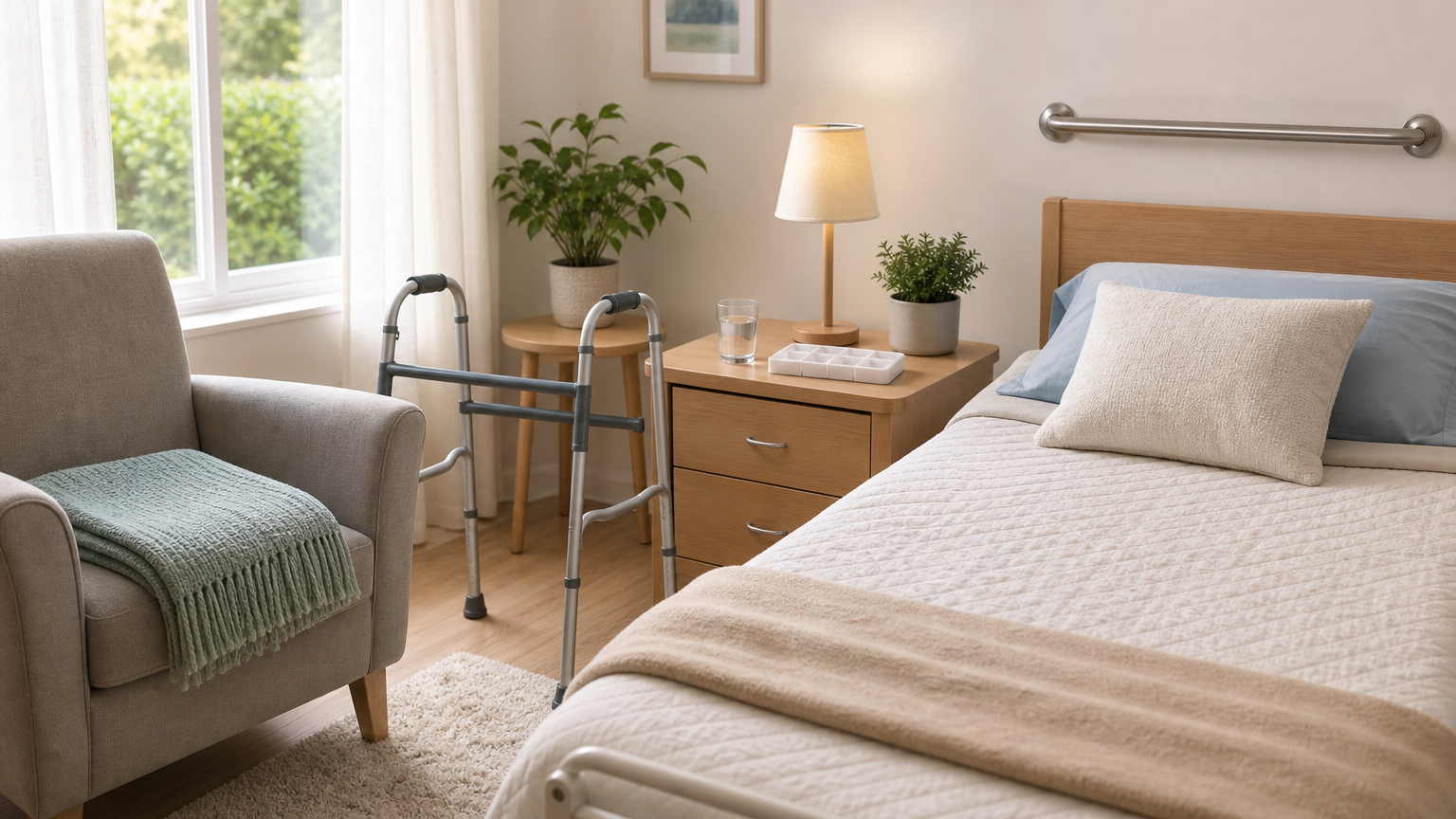
Caring for an older person takes much more than goodwill: it takes technique for hygiene and moving them without risk of falls, attention to diet and the medication routine, and sensitivity to the physical and emotional changes of ageing. That set of skills is what a course for carers of older people sets out to teach, whether for people who want to work professionally or for those caring for a relative at home.
Care that takes preparation, not just willingness
Common mistakes in informal care — moving a bedridden older person the wrong way, missing signs of dehydration, handling a refusal to take medication badly — do not happen for lack of affection but for lack of technique. A structured course exists precisely to fill that gap, giving confidence both to the carer and to the person being cared for.
What a carer does and does not do
A carer's work centres on activities of daily living: help with bathing, hygiene and dressing, preparing and serving meals, encouraging hydration, help with getting around, going along to appointments, companionship and encouraging independence. The routine also includes helping with medication already prescribed by a doctor, at the set times and doses.
There is, however, a clear limit. Technical nursing procedures, such as giving injections, dressing complex wounds or handling feeding tubes, are for nursing professionals. Carers also do not change doses or make diagnoses. Knowing this limit protects the older person, the family and the carer.
Carer or nursing technician?
The two roles complement each other but are not the same. The carer works on the well-being and daily routine of the person who needs support. A nursing technician has secondary-level technical training, is registered with the professional council and provides health care as such. That professional becomes indispensable when the older person has a complex clinical condition and depends on ongoing procedures.
Is the occupation regulated?
Carer for older people is a recognised occupation in the Brazilian Classification of Occupations (CBO 5162-10), the code used for formal employment records. Even so, there is no federal law regulating the profession: a bill that created and regulated the profession of carer was vetoed in full in 2019, and Congress upheld the veto. In practice, this means there is no professional council and no training required by law, and that a well-structured course is the main way to stand out for anyone who wants to work safely.
The subject has moved forward in Congress again. In March 2026, the Senate Economic Affairs Committee approved Bill PL 76/2020, which regulates the profession of carer, including carers for older people. The text requires, among other things, a minimum age of 18, completed lower secondary schooling and a vocational qualification course, and goes next to the Social Affairs Committee. Until the bill is approved and signed into law, the current situation applies.
Everyday challenges
Two concerns come up often among families and carers:
- Preventing falls: small adaptations make a big difference, such as good lighting in corridors and on the way to the bathroom, removing loose rugs and exposed cables, grab rails in the shower and next to the toilet, and non-slip floors.
- Dementia and confusion: a predictable routine, calm communication in short sentences and choosing to redirect attention rather than argue help reduce the older person's anxiety and everyday conflict.
And there is a third point, often forgotten: carers need care too. The physical and emotional strain on the carer, professional or family, is real, and recognising one's own limits is part of good care.
What the course teaches
The programme is built around the comprehensive care of the older person, covering:
- Hygiene and personal care
- Diet and nutrition
- Running the care routine
- Accident prevention
- Moving and handling techniques
- Basic first aid
- Physical, emotional and social aspects of ageing
- Ethics and humane care
At 160 hours, it is a substantial programme, enough to prepare students both for care at home and for work in other people's homes, clinics, long-stay institutions and home-care services, always in line with the principles of Brazil's Statute of Older Persons (Law 10,741/2003).
The course at the Brazilian Red Cross — Rio de Janeiro Branch
The branch's Escola de Educação e Saúde CVB-RJ (School of Education and Health) runs Carer for Older People as a non-accredited course (curso livre):
- Hours: 160
- Minimum schooling: completed lower secondary (ensino fundamental)
- Format: in person, with theory and practice
- Language: Portuguese — there is no interpreting or group in another language
- Who it is for: anyone interested in caring for older people, professionally or within the family
- Certificate: issued by the Brazilian Red Cross — Rio de Janeiro Branch at the end of the course
A non-accredited course does not replace technical nursing training, but it offers a solid, practical foundation for anyone who wants to care better, backed by a humanitarian institution more than a century old.
Frequently asked questions
Is the occupation of carer for older people regulated? It is a recognised occupation in the CBO (code 5162-10), but it has no federal law of its own. The bill that regulated the profession was vetoed in 2019, and Congress upheld the veto. In March 2026, a new bill, PL 76/2020, which requires a vocational qualification course, was approved by the Senate Economic Affairs Committee and is still going through Congress.
What is the difference between a carer and a nursing technician? A carer supports the older person's activities of daily living and well-being. A nursing technician has technical training and professional registration, and performs health procedures such as injections and wound dressings.
Can a carer give medication to an older person? A carer can help with medication already prescribed by a doctor, at the set times and doses. A carer cannot change doses, recommend medicines or give injections.
Is this course recognised by Brazil's Ministry of Education (MEC) as a technical course? No. It is a non-accredited course — complementary, practical training, not a regulated technical course. The certificate is issued by the branch.
Can I take the course just to care for someone in my family? Yes. Many students take it to care for an older relative more safely and skilfully, with no intention of working professionally.
Where can I work after completing the course? In private homes, long-stay institutions, clinics, hospitals, day centres and home-care services.
Do I need previous experience? No. The course requires only completed lower secondary schooling and is open to beginners.
Sources and references
- Statute of Older Persons — Law 10,741/2003 (consolidated text) — Planalto — rights of older persons, in Portuguese.
- Carer's Practical Guide — Brazilian Ministry of Health — official reference on care at home, in Portuguese.
- Congress upholds full veto of bill regulating the profession of carer — Chamber of Deputies — status of the regulation of the profession, in Portuguese.
- CAE approves regulation of the profession of carer — Senate News — approval of PL 76/2020 by the Economic Affairs Committee, planned requirements and next stage, in Portuguese.
First published in Portuguese on 24 September 2026. Read the original →