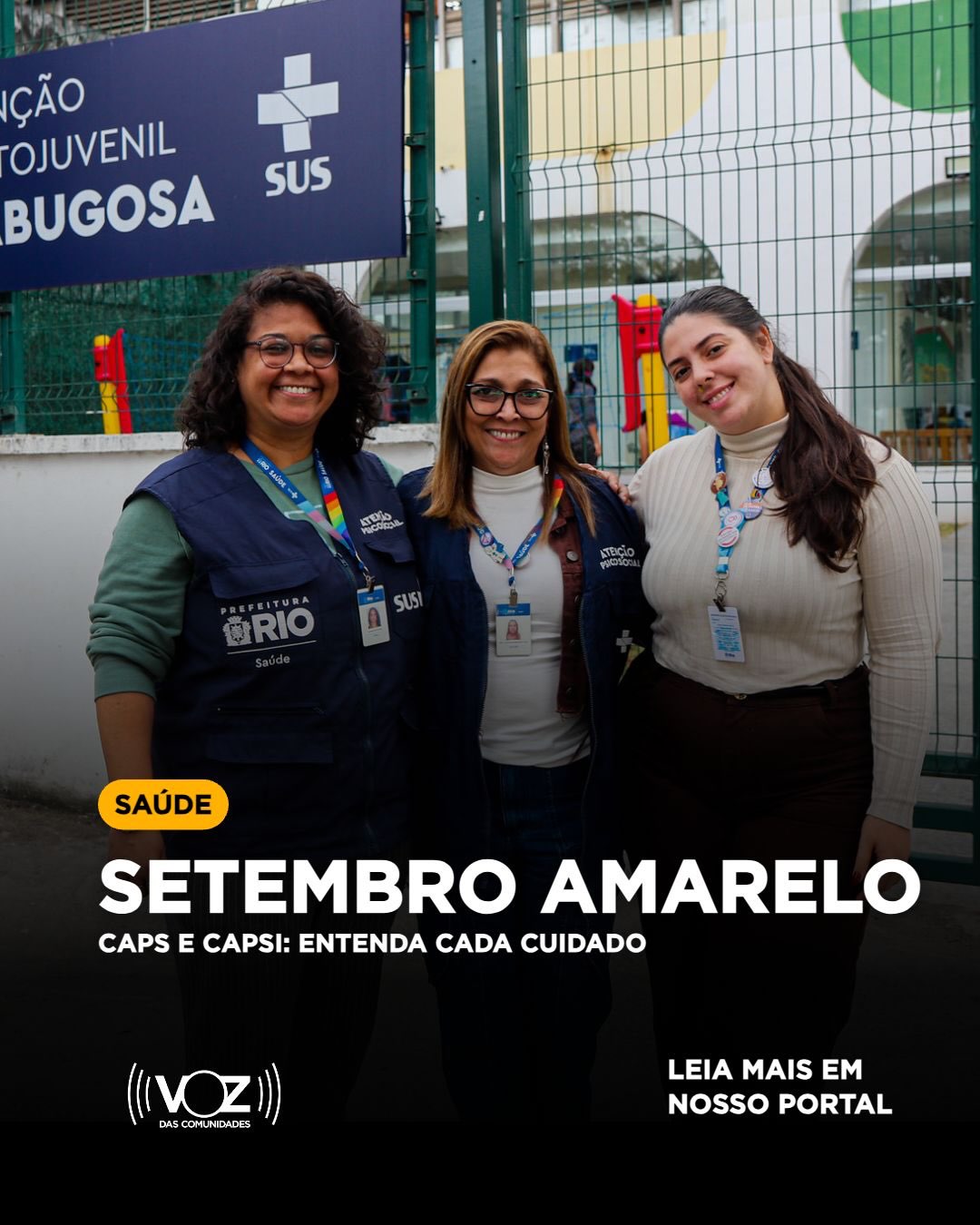
On 3 September, Voz das Comunidades, a community news outlet, published a report on the public mental health network that serves residents of the Maré, Alemão and Penha favela complexes and neighbouring areas. According to the report, care is provided by the CAPS and the CAPSi.
The text posted on the outlet's profile describes the service in these terms:
Residents of the Maré, Alemão and Penha complexes and neighbouring areas can count on a public mental health network that transforms lives every day: the CAPS and the CAPSi. — Voz das Comunidades, in an Instagram post (translated from Portuguese)
The full report, the profile says, is available in the Voz das Comunidades app for iPhone and Android. In the post, photography is credited to @vilmaribeirofotografia and the text to @karencmelo.
What the acronyms mean
CAPS stands for Centro de Atenção Psicossocial (Psychosocial Care Centre), a service of Brazil's public health system, the SUS, that cares for people in psychological distress in an open, community-based setting. The CAPSi is the version for children and adolescents. The acronyms are not explained in the material received.
What the material does not say
The report does not give the number of units in operation, their addresses, opening hours or how to be referred to the services. Nor does it say how many people are seen or which public body manages the units mentioned.
The material does not mention any involvement of the Brazilian Red Cross — Rio de Janeiro Branch in the services described.
As a general rule, addresses and opening hours of health units should only be published after confirmation with the public body that runs them. In an emergency where a life is at risk, the national public numbers in Brazil are 192 (SAMU, the ambulance service) and 193 (Fire Brigade).
Anyone who wants to read the full report can look up the @vozdascomunidades profile or download the outlet's app from the iPhone and Android stores.
Based on information from Voz das Comunidades (@vozdascomunidades), published on 3 September 2026 — original post, in Portuguese.
First published in Portuguese on 4 September 2026. Read the original →