

The ICRC is the International Committee of the Red Cross, an impartial, neutral and independent organisation founded in Geneva. Its exclusively humanitarian mission is to protect the lives and dignity of people affected by armed conflict and other situations of violence. It is one of the three parts of the International Red Cross and Red Crescent Movement, alongside the International Federation (IFRC) and the National Societies, such as the Brazilian Red Cross.
How the ICRC began
On 24 June 1859, the Swiss businessman Henry Dunant witnessed the aftermath of the Battle of Solferino, in northern Italy, and helped organise relief for the wounded with the support of local people. In 1862 he published A Memory of Solferino, with two proposals: train relief volunteers in peacetime, and create an international agreement to protect their work.
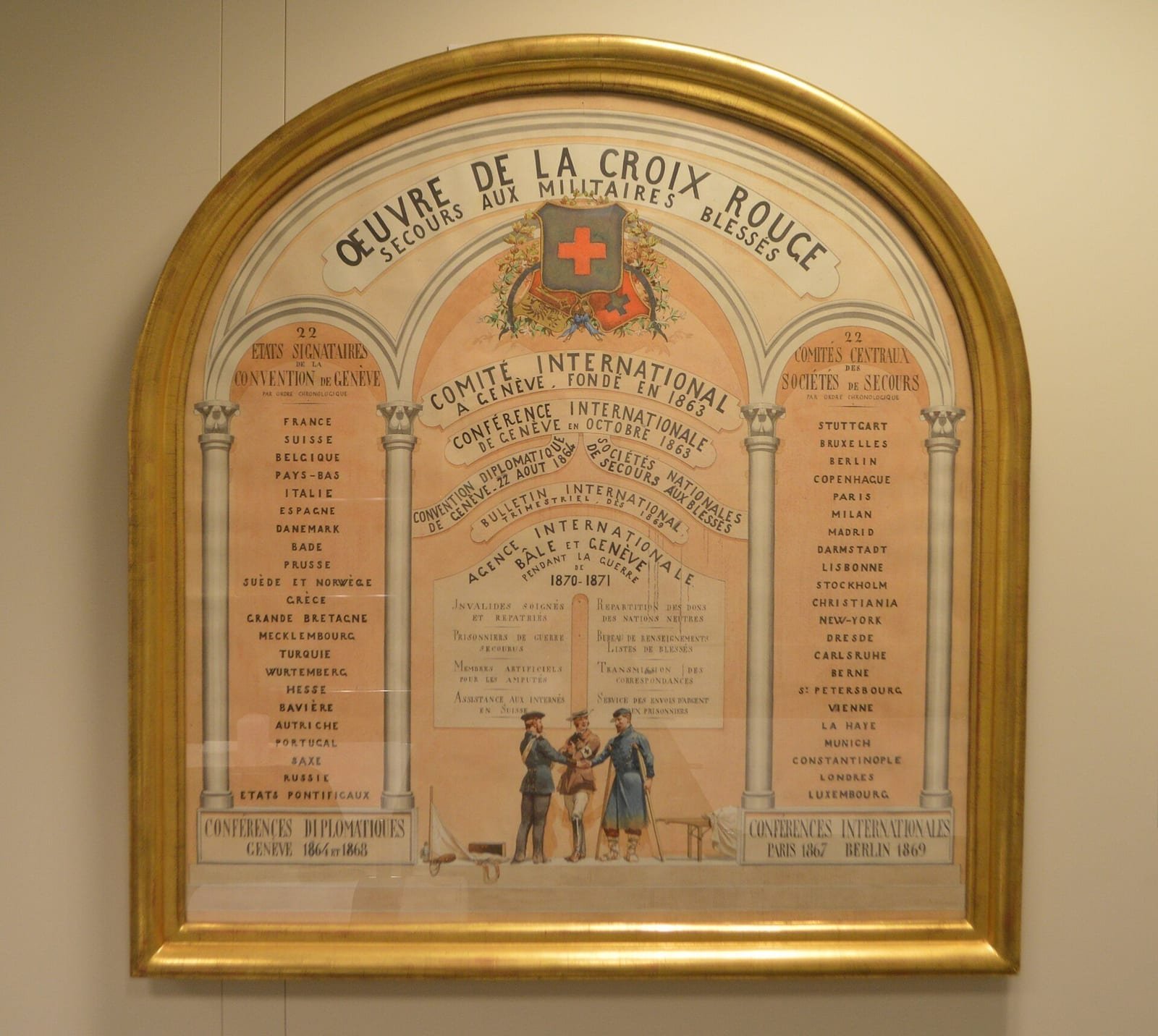
The ICRC was founded in Geneva on 17 February 1863 by Dunant and four other citizens. In 1864, the first Geneva Convention turned those ideas into a treaty and became the basis of modern international humanitarian law. The volunteer groups Dunant proposed gave rise to the first National Societies. The full story is in who founded the Red Cross.
What the ICRC does
The ICRC's mandate comes from the Geneva Conventions: to provide humanitarian assistance to people affected by armed conflict and to promote the rules that protect them. In practice, according to the Committee itself, its work includes:
- protecting and assisting people affected by armed conflict and other situations of violence;
- visiting people in detention;
- helping to reunite separated families;
- promoting and supporting the teaching and application of international humanitarian law among States and other actors.
The ICRC also directs and coordinates the Movement's international activities in armed conflict. Because it is neutral, it takes no sides in conflicts or political disputes, and that stance is what allows it to offer help to all sides.
In legal terms, the ICRC is an association governed by the Swiss Civil Code. To carry out its mission, it has a status equivalent to that of an international organisation and international legal personality.
ICRC, IFRC and National Societies: what is the difference?
The International Red Cross and Red Crescent Movement brings together three components, united by the same Fundamental Principles. Each one has its own role, according to the ICRC:
- ICRC: directs and coordinates the Movement's international activities in armed conflict and other situations of violence.
- International Federation of Red Cross and Red Crescent Societies (IFRC): leads and coordinates the Movement's international assistance to people affected by disasters and health emergencies, and officially represents the National Societies internationally.
- National Societies: act as auxiliaries to the public authorities of their countries in the humanitarian field. They are the component present in communities, and they keep working after the emergency ends. The 2024 ICRC page speaks of National Societies in 192 countries; the number varies with the source and the date.
Where the Brazilian Red Cross fits in
The Brazilian Red Cross is Brazil's National Society. It is not a branch or an arm of the ICRC: it is an organisation of the country itself, part of the Movement, with its own structure and activities. It was recognised by the ICRC in 1912 and admitted to the Federation in 1919.
The Brazilian Red Cross — Rio de Janeiro Branch is the National Society's branch in the state of Rio de Janeiro. It belongs to the Movement through the Brazilian Red Cross and shares the same principles, but its activities are those of a National Society at local level, not those of the ICRC. Its history is on our history page.
How the ICRC and National Societies complement each other
The ICRC works at international level, on the basis of the Geneva Conventions. National Societies work within each country, with volunteers and with the trust of their communities. The Federation links them and coordinates assistance in disasters and health emergencies. This division of roles is what allows the Movement to act in a coordinated way, without one component replacing another.
Frequently asked questions
What does ICRC stand for? International Committee of the Red Cross. In Portuguese the acronym is CICV. It was founded in Geneva on 17 February 1863.
Is the ICRC the same as the Brazilian Red Cross? No. The ICRC is an international organisation founded in Geneva. The Brazilian Red Cross is Brazil's National Society, an organisation of the country itself. Both are part of the same Movement and follow the same principles.
What is the difference between the ICRC and the IFRC? The ICRC directs and coordinates the Movement's international activities in armed conflict. The IFRC, the International Federation, coordinates international assistance to people affected by disasters and health emergencies and represents the National Societies.
Does the ICRC take sides in conflicts? No. The ICRC defines itself as impartial, neutral and independent, and it takes no sides in armed conflicts or political disputes.
Sources and references
- Mandate and mission — ICRC (in Portuguese): mandate, mission, legal status, neutrality and activities.
- 160 years of humanity — ICRC (in Portuguese): Solferino, the 1862 book, foundation on 17/2/1863 and the 1864 Convention.
- Geneva Conventions and the law — ICRC (in Portuguese): the Geneva Conventions and the ICRC's role in promoting IHL.
- Roles of the components of the Movement — ICRC (in Portuguese): the role of each component and the number of National Societies (192, 2024 page).
First published in Portuguese on 16 October 2026. Read the original →