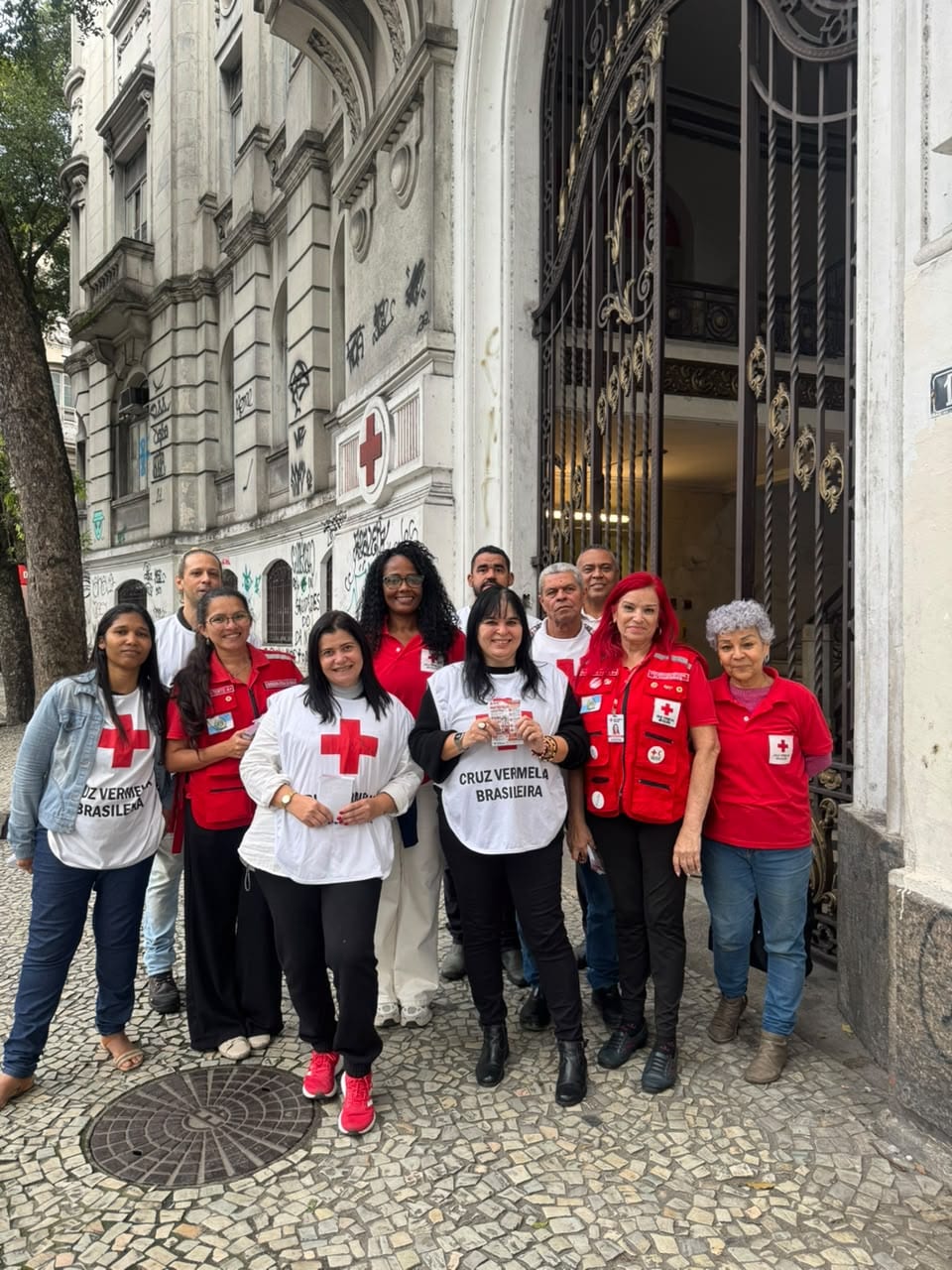
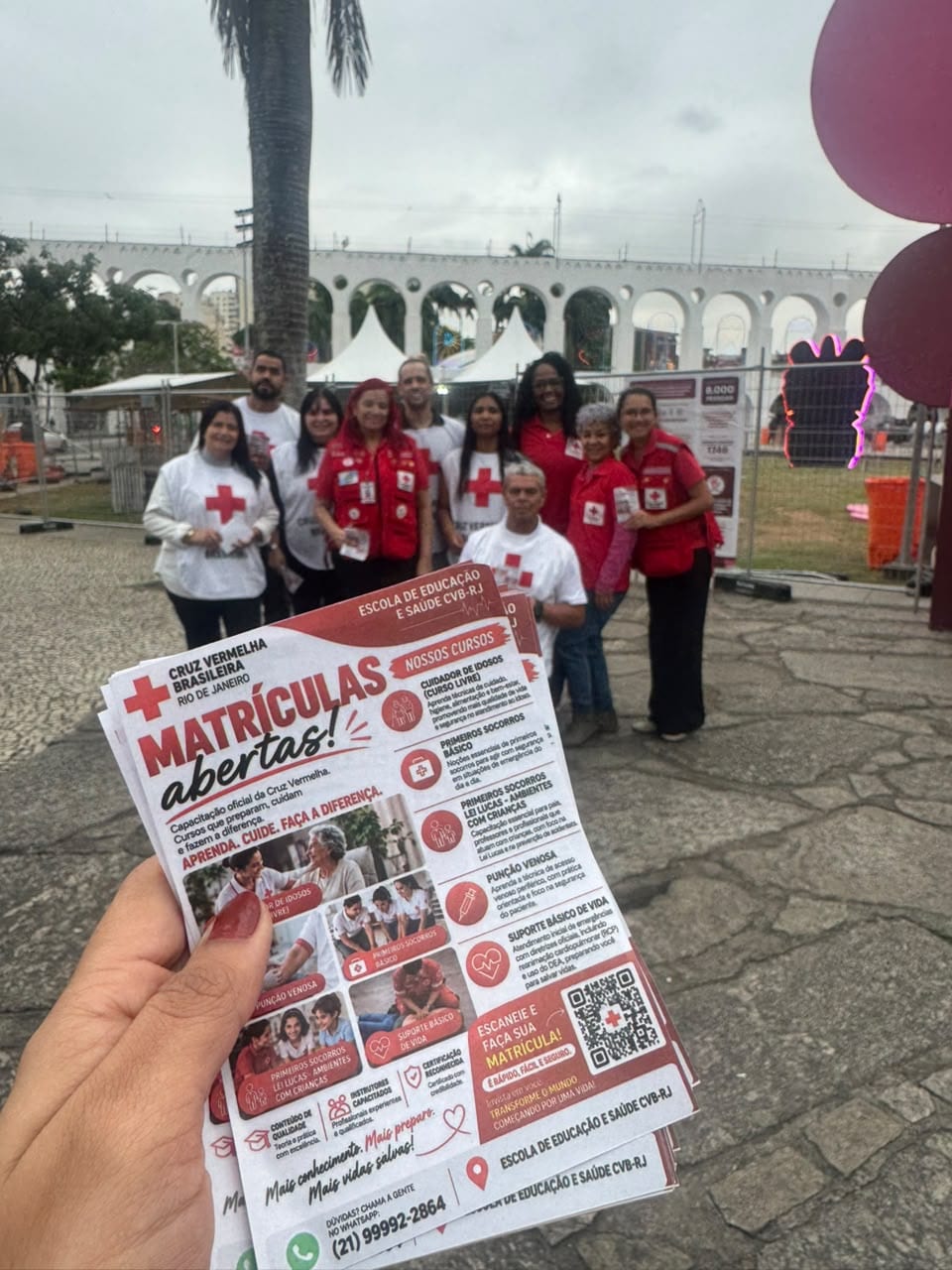
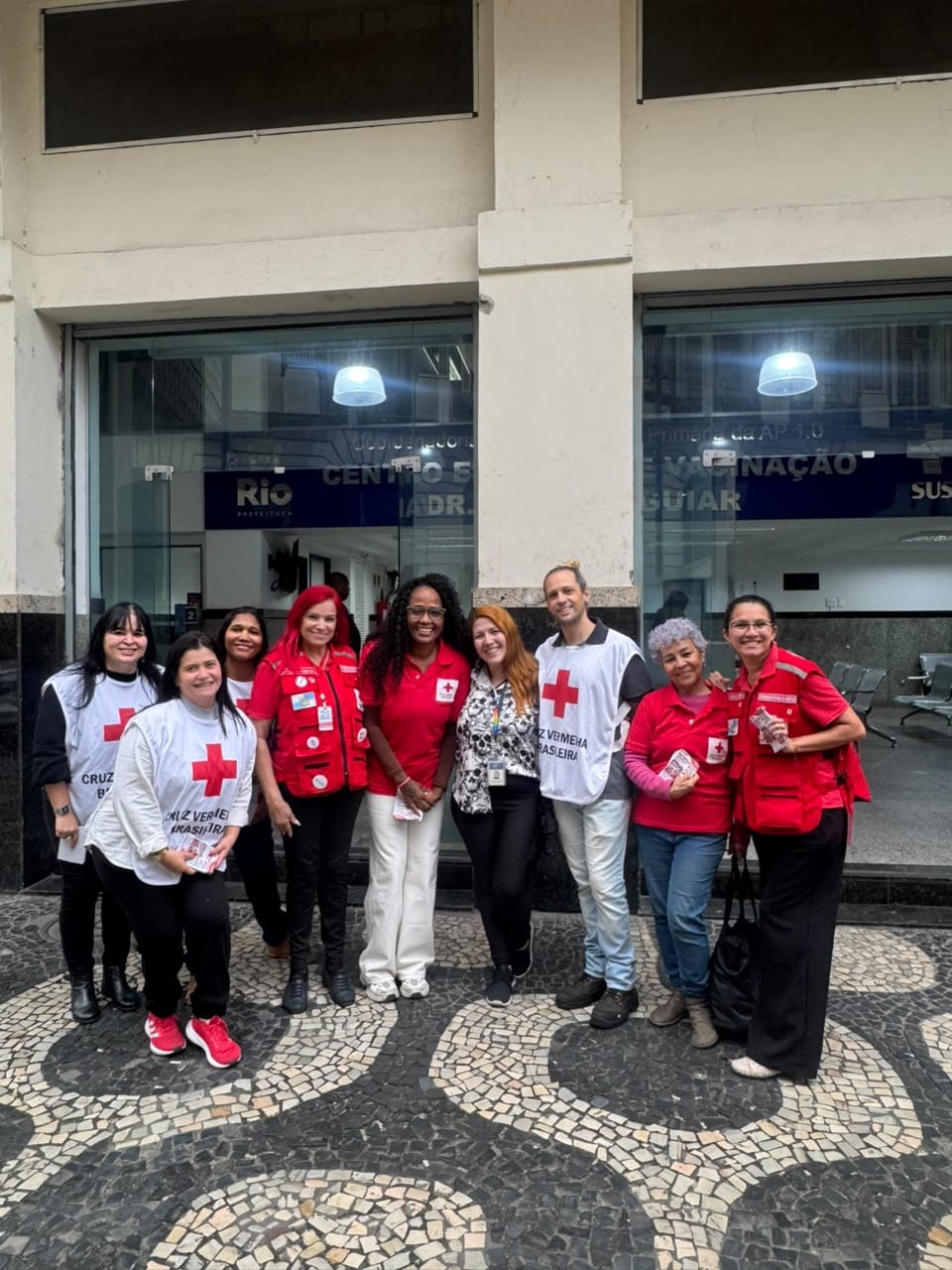
Knowledge saves lives too. This week the Brazilian Red Cross — Rio de Janeiro Branch went out to meet people in the city, to present its work and spread the word about the courses and training it offers at its headquarters in central Rio.
A street outreach event does not replace training in a classroom. It exists for the first step: showing what the branch teaches, who it teaches and how to sign up. Every conversation, every piece of guidance and every person who shows interest means more knowledge in circulation — and more people ready to help.
What the branch took to the street
The team's message was direct. The branch's courses are for people who want to learn, gain a qualification and be better prepared to make a difference, at work or in everyday life. Throughout the year, its Escola de Educação e Saúde (School of Education and Health) runs training in health, first aid, patient care and preparation for situations that demand skill and responsibility.
Which courses are open
Classes take place in person at the Red Cross Palace, Praça da Cruz Vermelha, 10, Centro. The current programme has seven courses:
- Basic First Aid — 8 hours. Recognising an emergency, giving initial care and calling for help until the emergency services arrive.
- First Aid under the Lucas Law — 8 hours. Training for schools, nurseries and other settings with children, covering what the law requires of their staff.
- Basic Life Support (BLS) — 4 hours. CPR and use of the AED, the automated external defibrillator.
- Peripheral IV Cannulation — 8 hours. Venous access for health professionals.
- Civil Firefighter — 80 hours. Prevention, emergency response and safety in places where many people gather.
- Carer for Older People — a non-accredited course of 160 hours.
- Lip Micropigmentation — 24 hours, with an emphasis on biosafety.
Enrolment holds your place. Every course is taught in Portuguese, in person. Hours, entry requirements and how enrolment works are explained in English on the courses page; the enrolment page itself is in Portuguese.
Why this is part of the humanitarian mission
The Red Cross was born to relieve suffering. In Rio de Janeiro, that also means training people who know what to do in the first few minutes — at home, at school, at work or in the street. Volunteering and the courses are separate paths, but both stand behind the same message: knowledge saves lives too.
People who would rather volunteer should fill in the official volunteer registration form. People who want the school's certificate go through course enrolment.
How to sign up
- Courses, in English: cruzvermelhariodejaneiro.org/en/courses
- E-mail: contato@cruzvermelhariodejaneiro.org
- Instagram: @cruzvermelhabrasileirarj
- Headquarters: Praça da Cruz Vermelha, 10, Centro, Rio de Janeiro
First published in Portuguese on 25 September 2026. Read the original →