
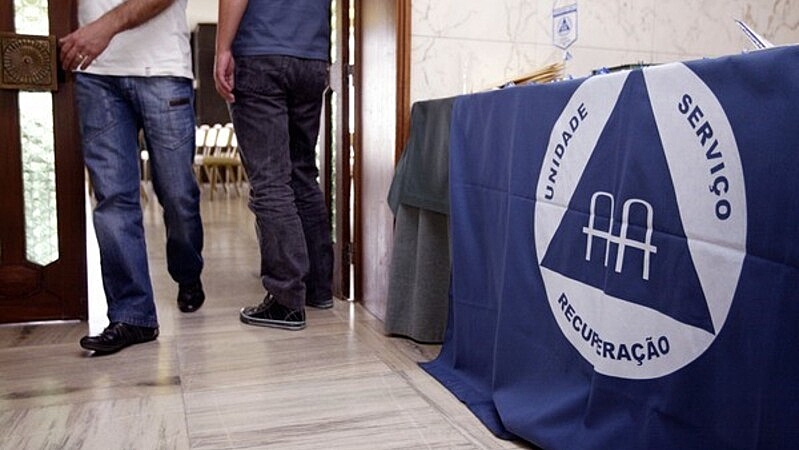
Imagine walking into a room where everyone is talking about their own pain — and not understanding a word. For many deaf people, that is how attempts to seek help in support groups end. On Friday, in Leblon, one meeting set out to change that.
Alcoholics Anonymous (A.A.) is marking 79 years in Brazil with a meeting open to the public in Rio de Janeiro's South Zone. According to Agência Brasil, the meeting is the first of its kind because it offers interpretation into Libras, Brazilian Sign Language, and takes place on Friday 4 September, at 5.30pm, at the Posto 11 group in Leblon.
According to the same report, the meeting is an opportunity to welcome deaf and hard-of-hearing people who are struggling with alcohol.
What an open meeting is
A.A. is a fellowship of people who share the experience of living with alcoholism and support one another to stay sober. It charges no fees, asks for no registration and is not linked to any religion, political party or institution. The format is simple: people sit in a circle, tell their story and listen to the stories of others.
Anonymity is one of the foundations of the fellowship. Participants are not identified by their full name, nor photographed. Besides people seeking help, open meetings usually welcome family members, friends and anyone interested in the subject. Conditions for taking part, accessibility of the venue and any need to register should be confirmed with the organisers.
What has been reported
The report does not give the full programme of the anniversary, nor does it say whether other meetings with sign-language interpretation will be held after this date.
Why access matters
Libras, Brazilian Sign Language, is recognised in law as a legal means of communication and expression of deaf communities in Brazil. Offering interpretation widens the reach of spaces for information and mutual support.
Communication barriers are among the reasons that keep deaf people away from health services and support groups. Meetings with interpretation close part of that gap and let a person follow the conversation in real time, without improvised go-betweens — without relying on a relative who translates half of it, without a summary afterwards, without being left out of their own conversation.
Accessibility, in this case, is not an organisational detail: it is the difference between being in the room and taking part in it. When a space for listening exists in sign language, information about health and care stops circulating only among those who can hear.
Practical information
Open meeting of Alcoholics Anonymous with interpretation into Brazilian Sign Language, on Friday 4 September, at 5.30pm, at the Posto 11 group, in Leblon, in Rio de Janeiro's South Zone.
In a health emergency in Brazil, call SAMU, the ambulance service, on 192, or the Fire Brigade on 193.
Care within reach
Talking about alcohol, suffering and starting over is talking about health. And for health to reach people, it has to overcome distances: money, transport, prejudice — and language too.
Readers following this subject may also want to read, on this site, the report on the CAPS and CAPSi mental health services in Maré, Alemão and Penha and the article on Yellow September and suicide prevention. Other articles are collected in the news section.
Based on information from Agência Brasil (human rights section), published on 4 September 2026 — original report, in Portuguese.
First published in Portuguese on 4 September 2026. Read the original →